Wasserstoff - Zukunftsthema in der exzellenten beruflichen
Bildung für nachhaltige Entwicklung (BBNE)
Hydrogen - a future topic in excellent vocational education
for sustainable development (VESD)
Wasserstoff - Zukunftsthema in der exzellenten beruflichen Bildung für nachhaltige Entwicklung (BBNE)
Von den Berufsbildenden Schule I Uelzen wurde ein KA2 Small Scale Antrag zum Thema Hydrogen - a future topic in excellent vocational education
for sustainable development (VESD) bei der Nationalen Agentur NABiBB in Deutschland erfolgreich gestellt. Der Projektbeginn ist am 01.09.2025 und geplantes Projektende ist der 28.02.2027. In dem Projekt arbeiten 12 Projektpartner zusammen:
1. Tartu Rakenduslik Kolledž
2. Istituto D'Istruzione Superiore Giotto Ulivi
3. MALTA COLLEGE OF ARTS SCIENCE AND TECHNOLOGY
4. Association La Châtaigneraie
5. Studienseminar Hannover LBS
6. 7 ERGASTIRIAKO KENTRO ATHINAS
7. Zespol Szkol Zawodowych w Wolsztynie
8. AGRUPAMENTO ESCOLAS RAFAEL BORDALO PINHEIRO
9. Berufsbildende Schulen Burgdorf der Region Hannover
10. Berufliches Schulzentrum "Friedrich Siemens" Pirna
11. IES CAYETANO SEMPERE
12. 1 Protypo Geniko Lykeio Athinon "Gennadeio".
Grundlage des Exzellenz-Netzwerkes ist der Wunsch, die unterschiedlichen Zentren der beruflichen Bildung zusammenzubringen und den regelmäßigen Dialog über exzellente BBNE zu etablieren. Durch den Dialog im Netzwerk stärken wir das Bewusstsein für die Europäische Union und die Europäische Identität. Die Zusammenarbeit im Projekt ist durch Respekt und Wertschätzung gekennzeichnet und fördert somit die demokratischen Werte. Neben dieser übergeordneten Motivation wird in diesem Projekt die Weiterentwicklung der beruflichen Bildung für nachhaltige Entwicklung unterstützt und eine Begeisterung für zukunftsorientiertes Lernen am Beispiel vom hochaktuellen Bildungssthema Wasserstoff geweckt. Alle Netzwerkpartner wissen um die Bedeutung von Wasserstoff für den Klimaschutz als erneuerbare Energie und für nachhaltige Mobilität von morgen. Es ist auch allen bekannt, dass die berufliche Bildung einem ständigen Veränderungsprozess unterliegt und sich den Marktbedingungen anpassen muss. Die Fachkräfte von morgen müssen so qualifiziert werden, dass sie innovativen Technologien offen gegenüberstehen; dies beinhaltet, dass der Unterricht zukunftsweisend gestalten werden muss. Die Wasserstofftechnologie könnte in vielen technischen Berufen einen großen Schritt hinsichtlich Energiewende leisten. Folglich beinhaltet eine erfolgreiche europäische Wasserstoffstrategie die Weiterentwicklung und die Qualifizierung von Fachpersonal. Für die Wasserstoffwirtschaft ist qualifiziertes Personal unabdingbar, damit der Transformationsprozess zur Nutzung der erneuerbaren Energien gelingt. Der Austausch über berufliche Bildung stärkt die Weiterentwicklung (best practice learning) und die Anpassung der beruflichen Bildungssysteme im Bereich nachhaltiger Energieträger europaweit. Wasserstoff, insbesondere der grüne Wasserstoff, gilt als Schlüsselelement für die Energiewende. Er soll fossile Energieträger wie Kohle und Gas ablösen. Kompetenzen im Umgang mit Wasserstoff werden thematisiert und didaktisch aufbereitet.
Hydrogen – a future topic in excellent vocational education for sustainable development (VESD) – KA 2 Small Scale Project
The vocational school I Uelzen successfully submitted a KA2 Small Scale application on the topic of Hydrogen – a future topic in excellent vocational education for sustainable development (VESD) to the National Agency NABiBB in Germany. The project will start on 1 September 2025 and is scheduled to end on 28 February 2027. Twelve project partners are collaborating on the project:
1. Tartu Rakenduslik Kolledž
2. Istituto D'Istruzione Superiore Giotto Ulivi
3. MALTA COLLEGE OF ARTS SCIENCE AND TECHNOLOGY
4. Association La Châtaigneraie
5. Studienseminar Hannover LBS
6. 7 ERGASTIRIAKO KENTRO ATHINAS
7. Zespol Szkol Zawodowych w Wolsztynie
8. AGRUPAMENTO ESCOLAS RAFAEL BORDALO PINHEIRO
9. Berufsbildende Schulen Burgdorf der Region Hannover
10. Berufliches Schulzentrum "Friedrich Siemens" Pirna
11. IES CAYETANO SEMPERE
12. 1 Protypo Geniko Lykeio Athinon "Gennadeio".
The basis of the network of excellence is the desire to bring together the various vocational training centres and establish regular dialogue on excellent BBNE. Through dialogue within the network, we are raising awareness of the European Union and European identity. Cooperation in the project is characterised by respect and appreciation, thereby promoting democratic values. In addition to this overarching motivation, the project supports the further development of vocational education for sustainable development and inspires enthusiasm for future-oriented learning using the highly topical educational topic of hydrogen as an example. All our network partners are aware of the importance of hydrogen for climate protection as a renewable energy source and for the sustainable mobility of tomorrow. It is also well known that vocational education and training is subject to constant change and must adapt to market conditions. Tomorrow's skilled workers must be trained to be open to innovative technologies; this means that teaching must be designed with the future in mind. Hydrogen technology could represent a major step forward in terms of the energy transition in many technical professions. Consequently, a successful European hydrogen strategy involves the further development and training of skilled personnel. Qualified personnel are essential for the hydrogen economy if the transition to renewable energies is to succeed. The exchange of information on vocational training strengthens the further development (best practice learning) and adaptation of vocational training systems in the field of sustainable energy sources throughout Europe. Hydrogen, especially green hydrogen, is considered a key element in the energy transition. It is intended to replace fossil fuels such as coal and gas. Skills in handling hydrogen are discussed and prepared for teaching purposes.
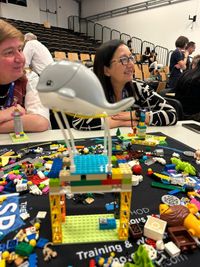
By creating/presenting various learning arrangements at different levels and facilitating discussion about them, the network contributes to the practical implementation of hydrogen in the classroom and its inclusion in the curricula of the various levels of the EQF/EQR.
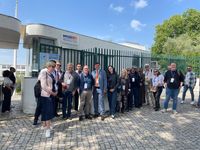
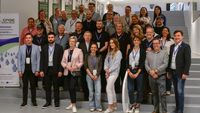
Pictures from the Athens Conference 11. - 14.11.2025
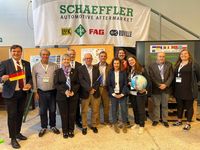


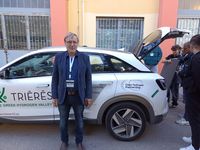
 | Athens Draft Program Athen_draft-program_11.-14.11.2025_H2-VESD Congress- Stand 11.11.2025_aktualisiert.pdf (605.4KB) |
| Athen_draft-program_11.-14.11.2025_H2-VESD Congress- Stand 11.11.2025_aktualisiert.pdf (605.4KB) |
| Übersicht Overview uebersicht-3.pdf (1.15MB) |
| uebersicht-3.pdf (1.15MB) |
 | 2025 11 12 Hydrogen-loukas.pdf (1.9MB) |
| Presentation-7 EK.pdf (2.72MB) |
| Presentation-7 EK.pdf (2.72MB) |
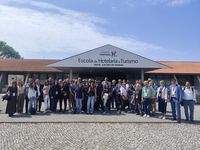
Pictures from the Caldas da Rainha Conference 28. - 29.4.2026